In brief: In today’s post we discuss Houston’s typical high temperatures on Halloween, and what conditions will be like this year. Also, is there another decently strong cold front coming through any time soon?
Halloween highs
The first thing to know about temperatures in Houston on Halloween is that they bounce around a lot. At this time of year we can still feel almost summer-like outside, and we can get some really robust cold fronts. The historical range of highs on October 31 in Houston runs from a low maximum temperature of 47 degrees (set in 1925) to 88 degrees (2004).
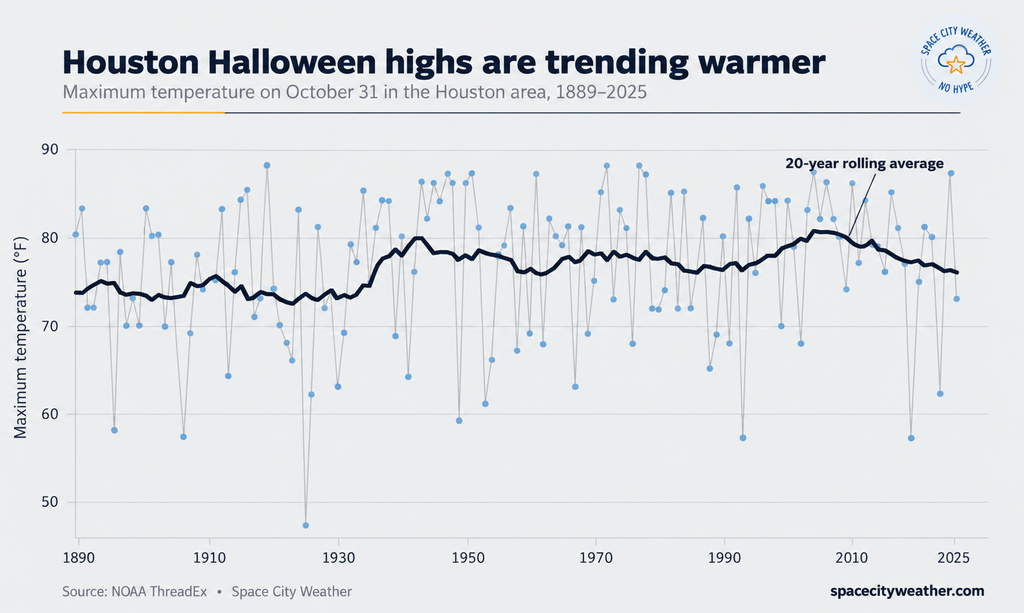
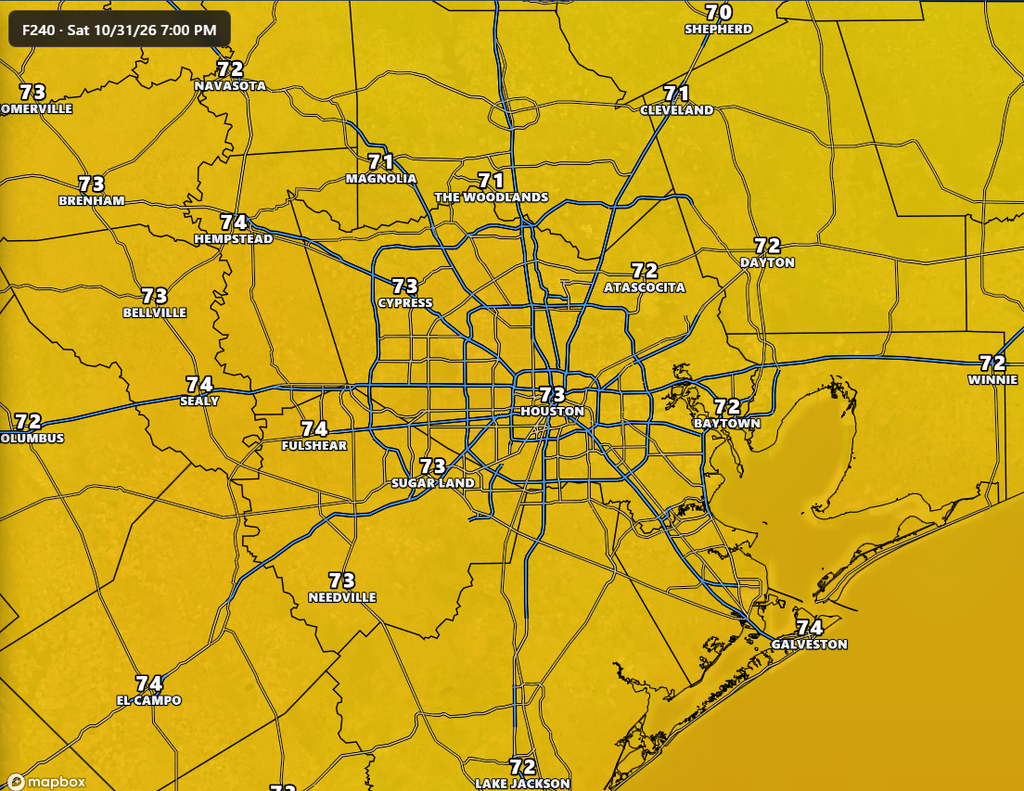
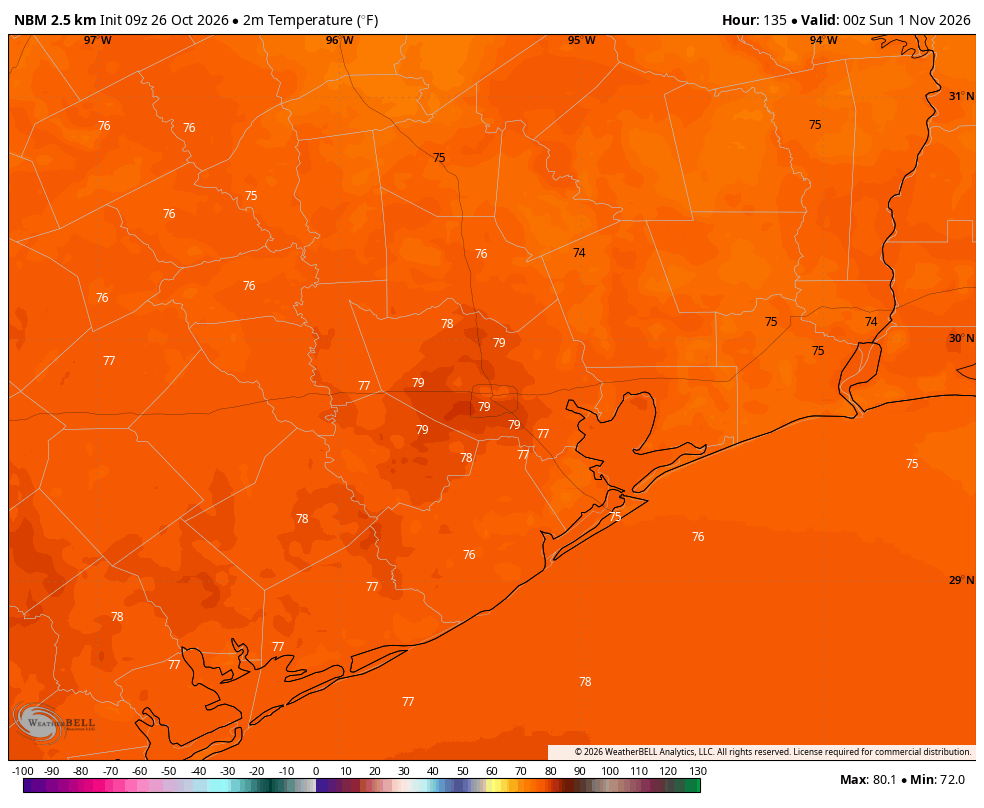
Over the last century, the average high temperature has trended about 1 to 2 degrees warmer. Normal highs are now in the upper 70s. This year will be on the warmer side, with highs likely in the low- to mid-80s. I don’t think we’ll approach the the record high of 88 degrees, but it will feel fairly muggy outside. Anyway, by trick-or-treating time temperatures should have fallen into the upper 70s, so it will be pretty comfortable unless you’ve got a warm, woolly costume.
Speaking of Halloween, I had a Vivint doorbell installed last year, and we’ve been having great fun here with Halloween chimes to surprise unsuspecting visitors. Changing the chimes is super easy to do.
Monday
Broadly speaking, Houston’s weather for the next week or so will be warmer, and a bit more humid. Today will be mostly sunny, with highs in the low- to mid-80s. Winds will be from the east at about 5 to 10 mph. Humidity levels will be modest. Lows tonight will be in the mid-60s.
Tuesday and Wednesday
With dewpoints recovering into the 60s, these days will both see a few more clouds and somewhat higher humidity. Highs will reach the low- to mid-80s. Rain chances over Houston will be about 20 percent on Tuesday, but areas southwest of the Houston region, toward Matagorda Bay, have a better chance, perhaps 40 percent or higher. Nights become warmer and muggier, in the upper 60s.
Thursday
Some slightly drier air may work its way into our region on Thursday, allowing for a slight dip in humidity. Expect highs in the lower 80s, with nighttime lows in the mid-60s.
Friday and Saturday
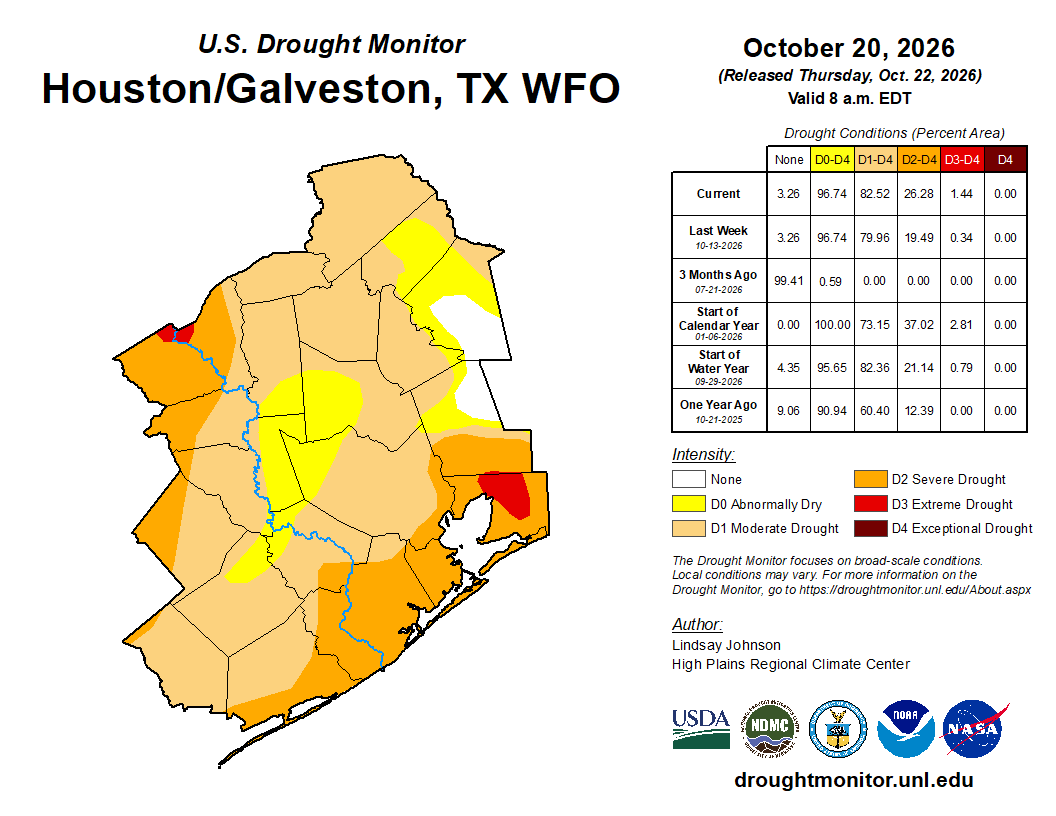
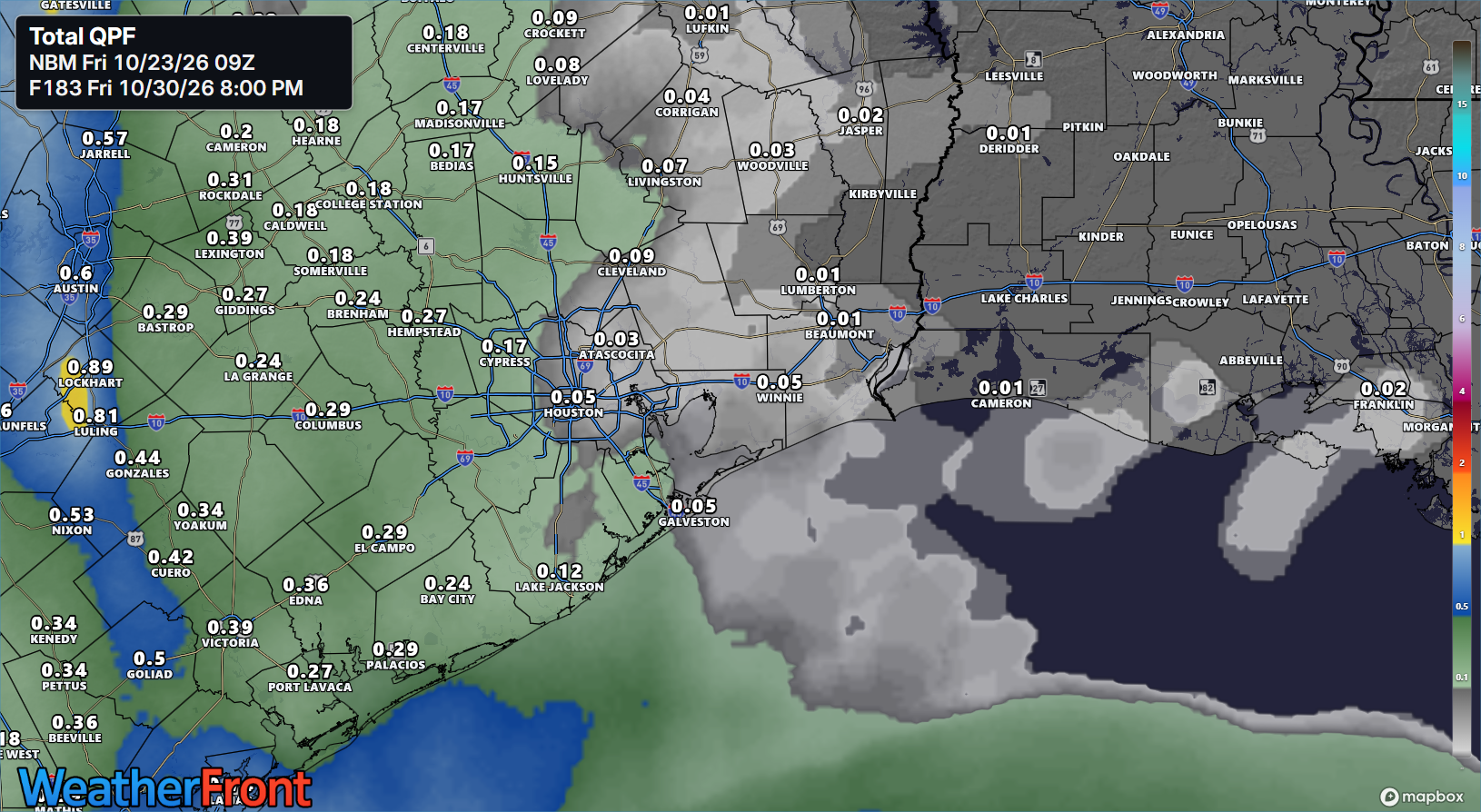
Both of these days should see a mix of sunshine and clouds, with highs in the low-to-mid 80s. I expect humidity levels to rise back up some. It won’t be oppressively humid, but it will feel humid for late October. Rain chances on both days are about 30 percent, but I want to see a little more data before having confidence in a precipitation forecast. In the big picture, however, overall chances are trending down, which is good for trick-or-treaters, but bad for our region’s drying soils.
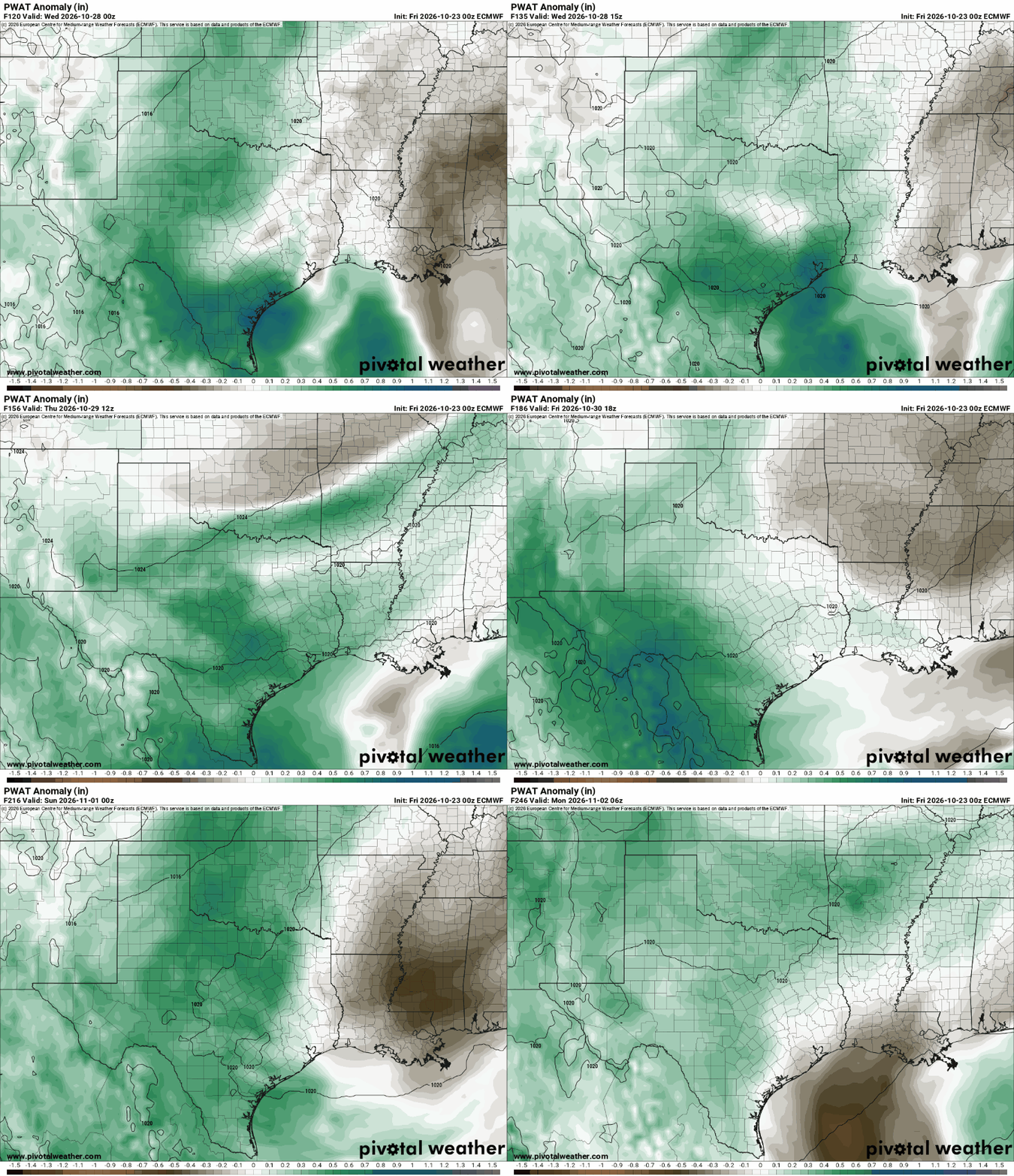
Sunday, Monday, and next week
The early part of next week looks warm and mostly sunny, with high temperatures in the mid- to upper-80s. If that sounds uncharacteristically warm for early November, you’re correct. However the forecast models are continuing to suggest that a decently strong fall front will arrive seven to nine days from now, perhaps around next Tuesday, with a solid chance of precipitation accompanying it. We can hope.