Tropical Storm Ian is bound for the southeastern Gulf of Mexico as a powerful hurricane

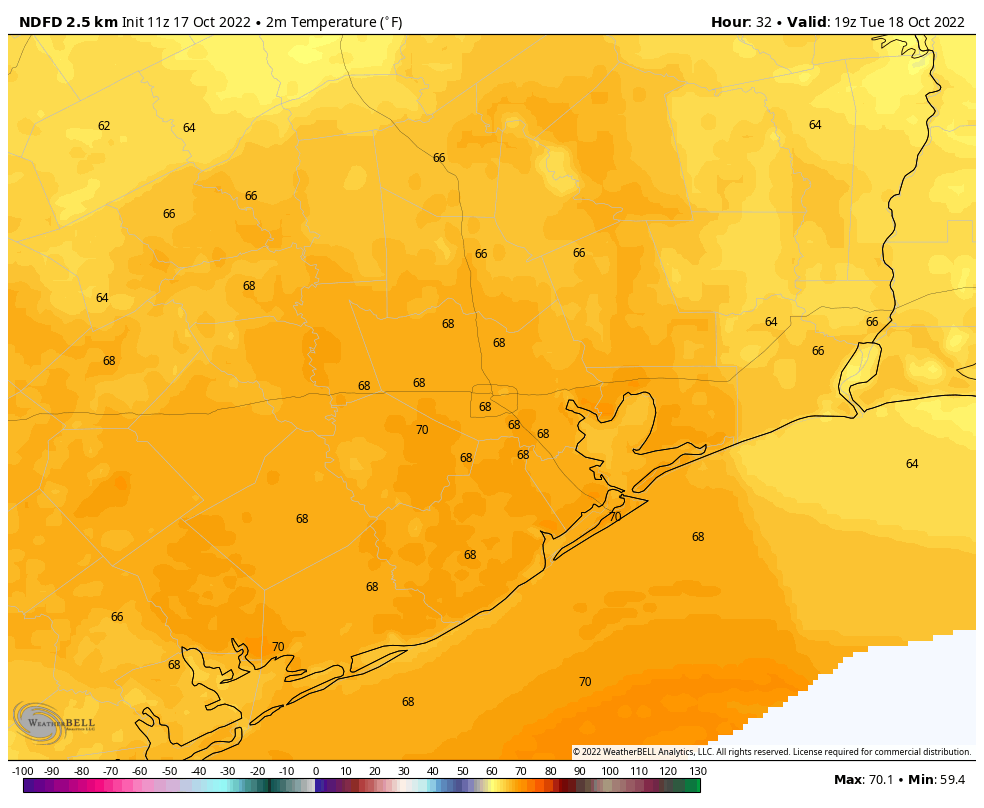
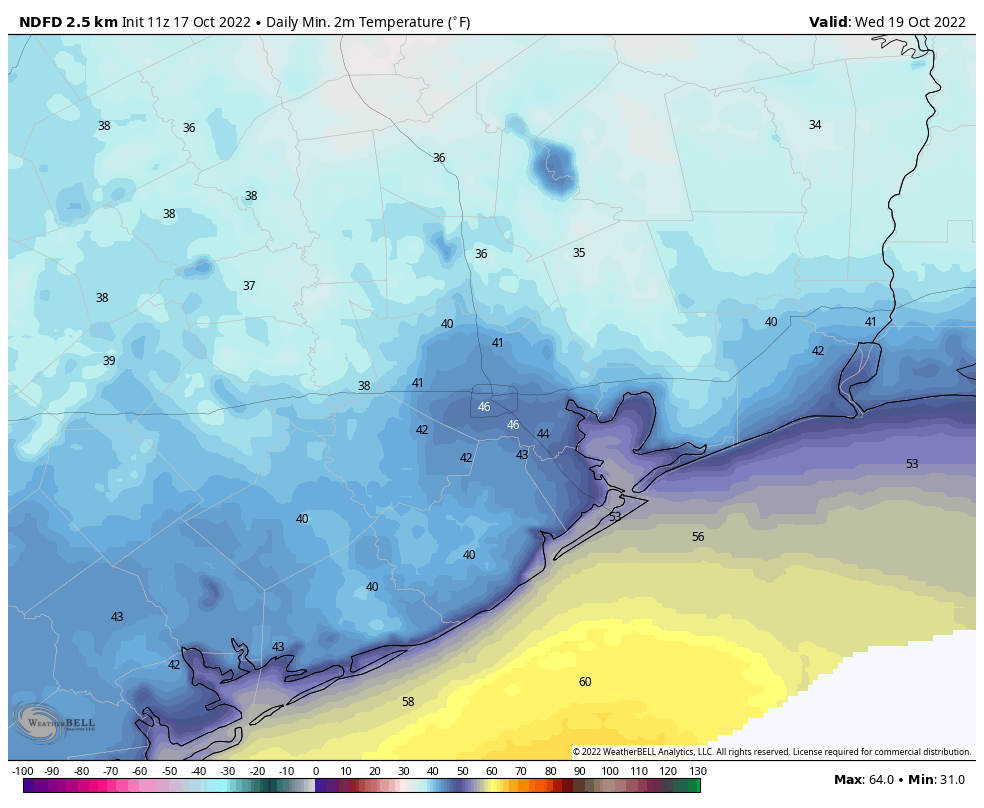
Please note: Tropical Storm Ian is highly unlikely to have direct impacts on Texas, aside from some coastal swells later next week. In fact, a reasonably strong cold front remains on track for Houston on Monday, bringing cooler and much drier air—dewpoints in the upper 40s, anyone?—into the region for most of next week. However, we continue to get questions about Ian, and with NASA’s Artemis I mission on the launch pad in Florida I thought it prudent to offer an updated forecast on the storm.

What we know

As of late Saturday morning, Tropical Storm Ian still has not developed a well defined center of circulation and has a vertical structure that is tilted. This means the storm is still struggling to get organized. However that could soon change, as wind shear near Ian lessens and the storm passes over very warm waters in the Caribbean Sea. Our best way to measure this is through a variable known as “tropical cyclone heat potential,” which measures not just the sea surface temperature, but the depth of this warm water, which is important as a tropical system churns up water from below. A value above 80 is conducive for intensification. With values of 100 to 120 in Ian’s path, the storm is poised for rapid intensification during the next two days if it can align its inner core. Most likely, Ian will be a hurricane on Monday as it approaches Cuba.

Tropical cyclone heat potential with Hurricane Ian’s forecast track superimposed. (NOAA)

We also are fairly confident in Ian’s track through Monday, as it should pass to the south of Jamaica and then turn northwest toward the western edge of Cuba. It should then emerge in the southeastern Gulf of Mexico by Monday night or Tuesday morning. At this point I think it will probably be far enough west of the Florida Keys to spare those islands the worst effects, but I am not prepared to guarantee that.

What we don’t know

Unfortunately, after Monday night there is a lot of uncertainty in the track forecast for Hurricane Ian. One of the reasons for this is because the center, as yet, lacks definition. The models are struggling with its starting point, and this leads to wide variances in its position three to five days from now. However, there has been a clear trend during the last 24 hours in which Ian’s track has gradually shifted west, such that the National Hurricane Center’s best track (at 10am CT Saturday) lies on the eastern side of the model guidance.

Tropical Storm Ian forecast track at 10am CT on Saturday. (National Hurricane Center)

It remains plausible that Ian could make a landfall anywhere from southwestern Florida to southeastern Louisiana next week, and these regions should absolutely remain vigilant. But at this time the most likely location is somewhere between Destin and Tampa, Florida. Until the center is better defined, and the models are more coherent, great uncertainty will remain. This situation should get better during the next 24 hours assuming that Ian’s structure improves, and the forecast models ingest data being gathered by NOAA aircraft flying in the storm’s vicinity today.

As for the Artemis I mission, NASA has canceled a planned launch attempt on Tuesday, September 27. It has also delayed a decision on whether to roll the rocket back into the Vehicle Assembly Building (where it could safely ride out a hurricane) until Sunday. This is prudent, given Ian’s slower movement. At this point I think there’s a pretty decent chance that it will be safe for the rocket to remain on the launch pad, preserving a launch opportunity on October 1 or 2. The forecast should be clearer by Sunday, when NASA aims to make this roll back decision.

Tropics update: Invest 98L reaches Caribbean Sea, but it’s difficult to see a path to Texas

Good afternoon, all. I just wanted to jump in with an update because we’re continuing to receive a lot of questions about the tropical system that’s forming in the southeastern Caribbean Sea. I’ll put the bottom line right up top: While there remains a lot of uncertainty about this tropical system and its eventual fate, in very few of those circumstances does the storm wind up directly impacting Texas. So while we need to be watchful, we certainly should not be worried. After all, we’re planning a Fall Day celebration on Sunday, October 2, and we feel good about that despite this tropical mischief.

A tropical system has moved into the Southeastern Caribbean Sea, but it remains disorganized as of Thursday afternoon. (NOAA)

As of this afternoon, despite being afflicted by wind shear in the wake of Hurricane Fiona, the area of investigation, or Invest 98L, is moving toward more favorable conditions. A tropical depression or storm is likely to form in the next day or two, and then by late Sunday or Monday it should reach the northern or northwestern Caribbean Sea. All well and good until then, but after that is when the uncertainty kicks in. This uncertainty should diminish during the next couple of days, with the formation of a center, and hurricane hunter data. So bear with us for a little while until the forecast comes into better focus.

Three scenarios

With that said we are starting to seem some trends and I think there are three major outcomes. The most likely scenario is that Invest 98L gets pulled to the north, into the eastern Gulf of Mexico or across the Florida peninsula during the Tuesday or Wednesday time frame of next week. It could be a fairly strong hurricane at this point, or interactions with Cuba could hamper its organization. The European model is fully on board with this idea:

The European model ensembles are sympatico with the first scenario, bringing a storm to the vicinity of Florida. (Weathernerds.org)

If the storm misses this opportunity to turn northward, into a trough along the US East Coast, it could continue tracking northwest into the central Gulf of Mexico. At that point it probably would move northward, toward the coastal areas of Louisiana, Mississippi, Alabama, or the Florida Panhandle. This is probably the second-most likely scenario.

Finally, a third possibility is that the system remains fairly weak and continues tracking west, into the Yucatan Peninsula, across the Bay of Campeche, and into the Mexico mainland. In this scenario the storm would probably remain south of Texas.

The GFS model ensembles reflect the potential for other scenarios to unfold. (Weathernerds.org)

There are some freak scenarios in which Invest 98L could find its way to Texas as a hurricane, but at this point they are unlikely, and again, probably not worth losing too much sleep about. Regardless, we’re going to remain on top of the situation and Matt will have a comprehensive update on 98L, and our forthcoming front, on Friday morning. I’m starting to get excited about the dry air on the way to Houston.

Houston sees upper 90s for five more days before a front, and keeping an eye on the tropics

Good morning. Today marks the autumnal equinox, when the sun shines directly over the equator. Put another way, for the northern hemisphere today is the first day of fall. Alas, it will not feel like fall outside, but rather the dead of summer. In fact, Houston faces five more very hot, August-like days before the first real cool front of the season arrives on Monday, ushering in drier and at least moderately cooler air.

For the last few years we have dubbed the first day it really feels like fall in Houston as FALL DAY. This year that will probably be Tuesday or Wednesday. Along with our partner Reliant Energy, we thought it would be fun to celebrate Fall Day and host our first-ever in-person event with me, Matt, Maria, Lee, and Dwight. Please join us on Sunday, October 2 between 10 a.m. and noon at the Houston Botanic Garden for a fall festive meet-and-greet with activities for kids and adults. Admission is free. Look for more details soon.

High temperature forecast for Thursday in Houston. (Weather Bell)

Thursday

High pressure will peak over the region today, and accordingly we’re going to see very warm temperatures with highs generally in the upper 90s. A few locations well inland may hit 100 degrees, whereas the coast will reach the low 90s. Skies will be sunny, with rain chances right at zero percent. Winds will be light, generally out of the north, at 5 to 10 mph. Lows tonight will drop into the mid-70s.

Friday

This will be another hot and sunny day, with highs perhaps 1 or 2 degrees lower than Thursday.

Saturday and Sunday

The weekend will see continued hot and sunny conditions, but as the high pressure ridge starts to back off we can expect to see highs dropping into the mid-90s for most of Houston. There is perhaps a slight chance of showers by Sunday afternoon, but I would not bet on it.

Next week

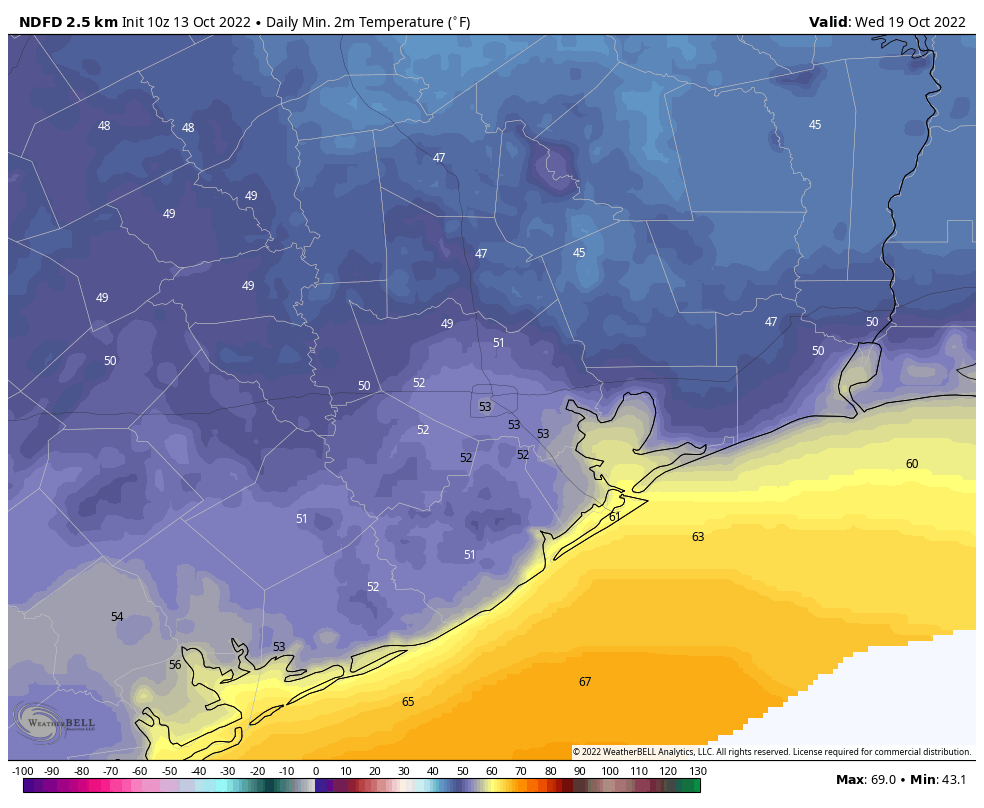
Monday will be hot again, but after then we’re anticipating the arrival of a cold front that will bring drier and cooler air into the region. Days are still going to be plenty warm, with ample sunshine and dry air helping to keep daytime highs in the upper 80s to perhaps 90 degrees. But nights should cool off fairly quickly as the sun goes down, and lows drop into the 60s. With dewpoints in the 40s and 50s for several days it will feel noticeably different. Rain chances stay low.

The tropics

There is a lot going on, including a significant storm headed to Canada in the form of Hurricane Fiona, but for the continental United States all eyes are on a tropical wave known as Invest 98L. The system has yet to show significant organization as it is being affected by strong wind shear, but there is high confidence that this will become a tropical storm, and then probably a hurricane, over the next several days as it moves into the central and the western Caribbean Sea.

Tropical outlook at 7am CT on Thursday. (National Hurricane Center)

After that time there remains some uncertainty on the track forecast as 98L likely turns to the northwest into the Gulf of Mexico. Over the last 24 hours the premiere US forecast model, the Global Forecast System, has brought 98L closer and closer to Texas before it makes landfall in Louisiana about 10 days from now. See below for the latest GFS forecast, which is far enough out that it is probably worthless. I am sharing it for illustration purposes, however.

Operational model forecast for the GFS model shows a landfall in Louisiana on October 2. (Weather Bell)

Under this scenario Invest 98L misses a “trough” that would allow it to move north early next week, and it continues to drift into the central and western Gulf of Mexico before ultimately turning north. In this case we would be watching the system for a long time. While this is certainly possible, at this time I do not consider this a likely outcome.

Ensemble forecast tracks for the GFS model. (Weathernerds.org)

Why? Because the reality is that the GFS model’s operational run is a significant outlier at this point. The vast majority of model guidance, including many members of the GFS ensembles (shown above) and the European model (shown below), keep 98L in the eastern half of the Gulf of Mexico.

Ensemble forecast tracks for the European model. (Weathernerds.org)

Our confidence in a track forecast should improve during the next 24 to 48 hours as the global models ingest data gathered by hurricane hunters, and the center of Invest 98L starts to form. Until that time expect a fair amount of uncertainty, and we’ll accordingly continue to watch it closely.

Fall is in sight for Houston, but we’re not there yet

Good morning. The season’s first real cool front is on the horizon, but it will be a painful trek to get there. That is because the next six days will bring very hot conditions, including the possibility of 100-degree days, before the arrival of a cooler and drier air later on Monday or Monday night. Rain chances are near zero until the front’s passage.

Wednesday

As high pressure starts to tighten its grip on our weather, highs today will be in the mid- to upper-90s across the region, with sunny skies. Winds will generally be light, out of the north. Lows tonight will drop into the mid-70s under clear skies.

High temperatures on Thursday and Friday will be 8 to 12 degrees above normal. (Weather Bell)

Thursday and Friday

High pressure reaches its peak thickness toward the end of the work week, and as a result these days will bring temperatures in the upper 90s for much of Houston, with 100 degrees possible for inland areas. Some locations probably will set record high temperatures. Expect sunny skies, and light easterly winds, for the most part.

Saturday and Sunday

The ridge starts to back off some this weekend, but we’re still going to be hot and sunny, with highs in the mid- to upper-90s. Some slight rain chances return to the forecast by Sunday afternoon, but they’re probably on the order of 10 or 20 percent.

Next week

We’re still working out the details, but confidence is now pretty high—think, 80 percent or greater—that a cool front will push into the area on Monday, with notably drier air arriving overnight or by Tuesday morning. There is a chance of rain with the front’s passage, but right now it looks pretty low. I’m thinking we’ll see highs in the 80s for a few days next week, with lows perhaps in the low 60s, but we’re still a bit fuzzy on that. Regardless, it’s going to be pretty amazing, I think.

The Atlantic tropics have come alive. (National Hurricane Center)

Tropics

The tropics are popping off all over the place. Hurricane Fiona is likely to pass just west of Bermuda and then menace Canada this weekend. Newly formed Tropical Storm Gaston is expectorating all over the northern Atlantic, but is not a threat to much of anything. The system of most interest to us is Invest 98L, shown in red above, which should soon enter the Caribbean Sea.

This storm will very likely become a hurricane in the Caribbean. For us, the big question is what happens next. While it’s not possible to say so with certainty, an eventual turn northward into the Gulf of Mexico about one week from now is the most probable outcome. Those who have read this site for any period of time understand that beyond about seven days weather forecast models become a lot less useful.

Climatologically, this would be late in the season for Texas to be directly impacted by such a storm, and most of the recent modeling guidance keeps the storm over the eastern half of the Gulf of Mexico. Ultimately a lot of factors, including next week’s front, will determine the track of the storm. We’ll keep watching.