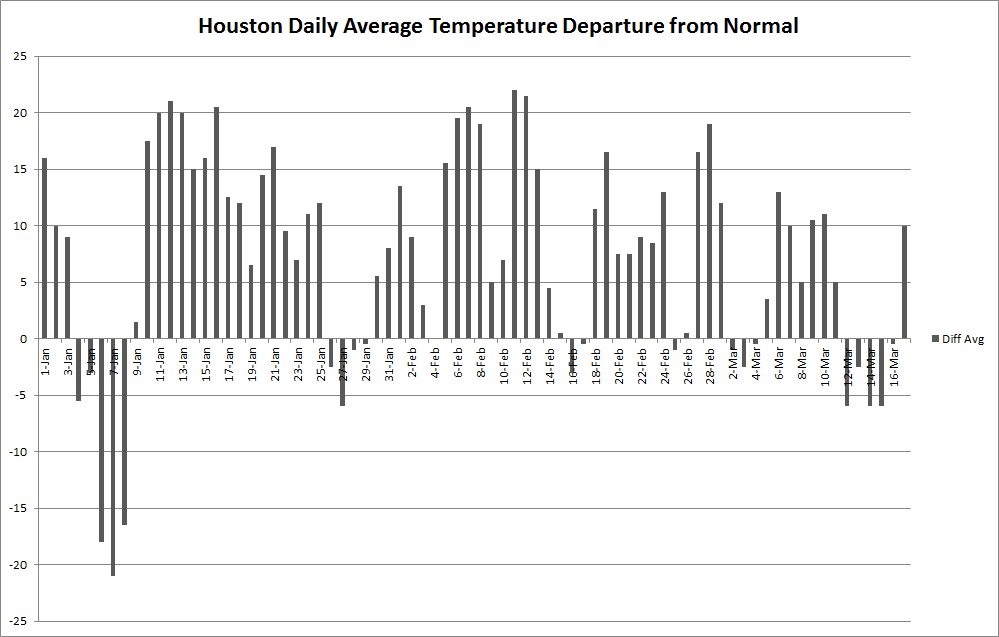
Good morning. Houston will remain warm this week, with high temperatures near record levels—as was the case for much of the winter. A chance of storms moves into the forecast by Friday.
Tuesday through Thursday
Expect mostly sunny days, with highs around 80 degrees near the coast and mid-80s for inland areas. Why is it so warm? Look no further than the Gulf of Mexico, where for the first time on record, the daily average surface temperature never fell below 73 degrees Fahrenheit this winter. Here’s a map showing the present-day temperature anomaly:
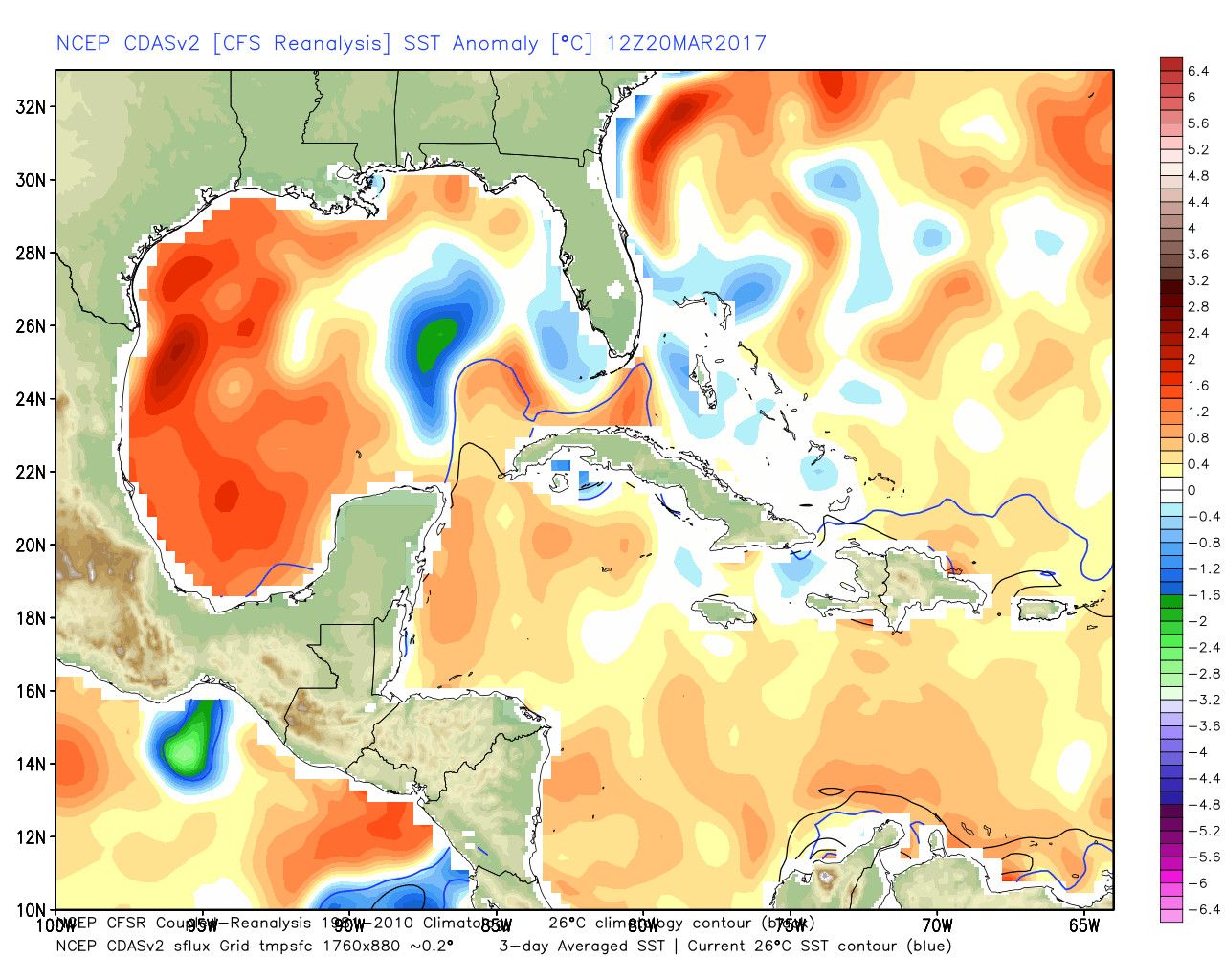
A steamy Gulf has meant that any time winds blow out of the south, we’re not going to cool down that much over night, and daytime temperatures can warm pretty quickly.
(An anonymous donor has sponsored Space City Weather this month)