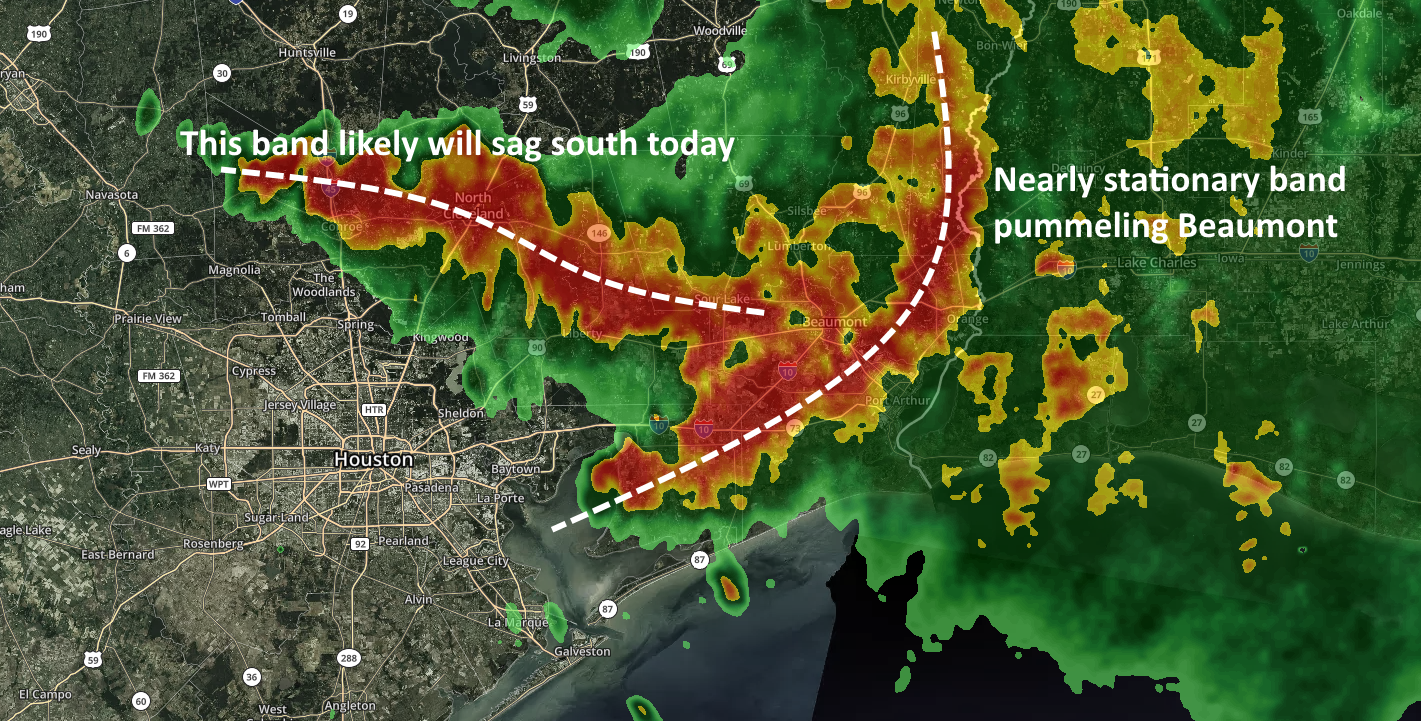
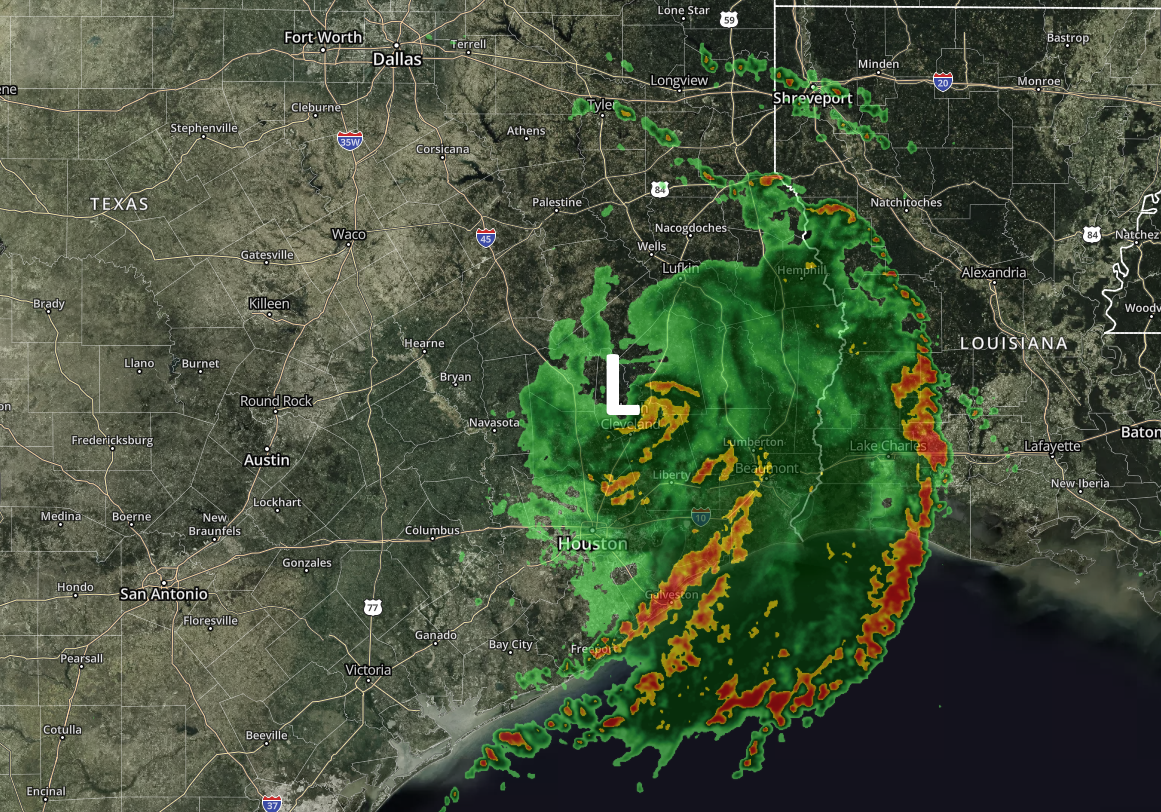
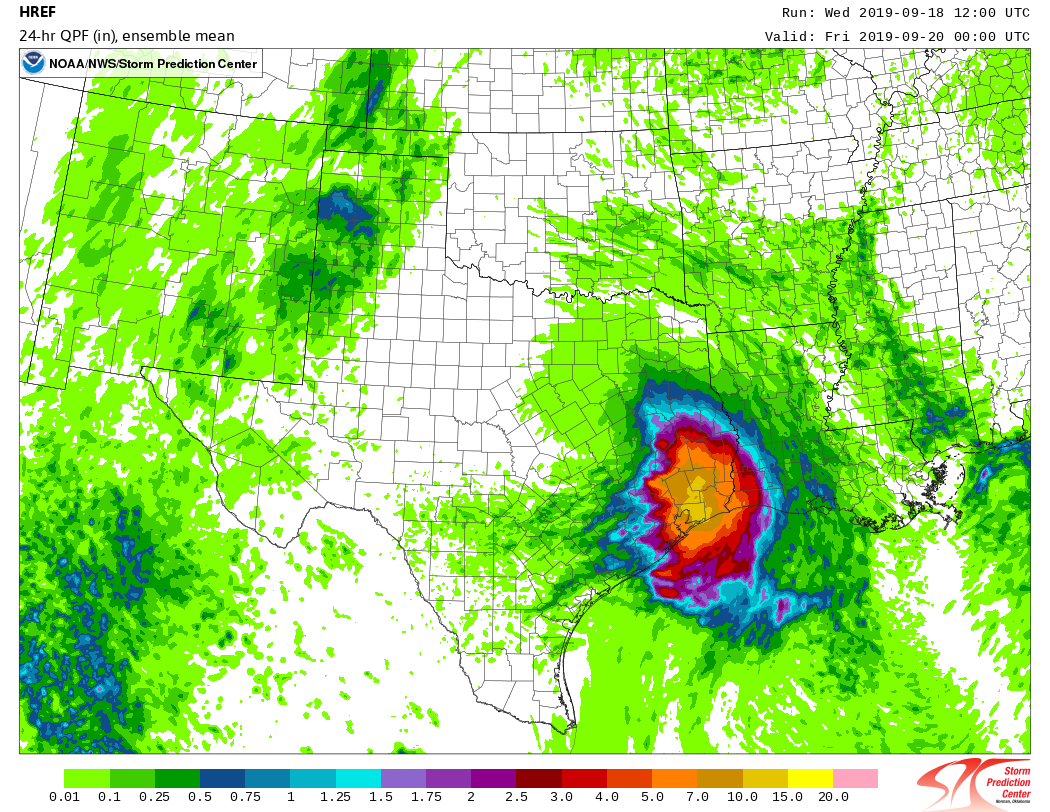
It’s been long day of storms for parts of the metro area—fortunately for Houston pretty much everything has now moved east toward Beaumont and Port Arthur, or (better) southeast into the Gulf of Mexico. Houston should (mostly) have a quiet night as storms fire to the east. Before getting to the forecast for the next few days, I wanted to share the following map of rainfall totals during the last 24 hours. It neatly illustrates the challenges of forecasting tropical precipitation along the upper Texas coast.
24-hour rainfall totals through 5pm CT Wednesday. (Texas Mesonet)
A few notes: We actually pinpointed the Matagorda region as a potential hotspot during the overnight hours, and they along with Wharton County certainly bore the brunt of heavy rainfall with 14+ inches in a few locations. An area near College Station also picked up 5 inches of rain, as did Port Arthur. Closer to Houston, the eastern half of Harris County got the worst of it on Wednesday. I would also like to point out that fewer than 100 miles separates Wharton, where a foot of rain fell, from Conroe, where one-third of an inch fell. Welcome to meteorology.
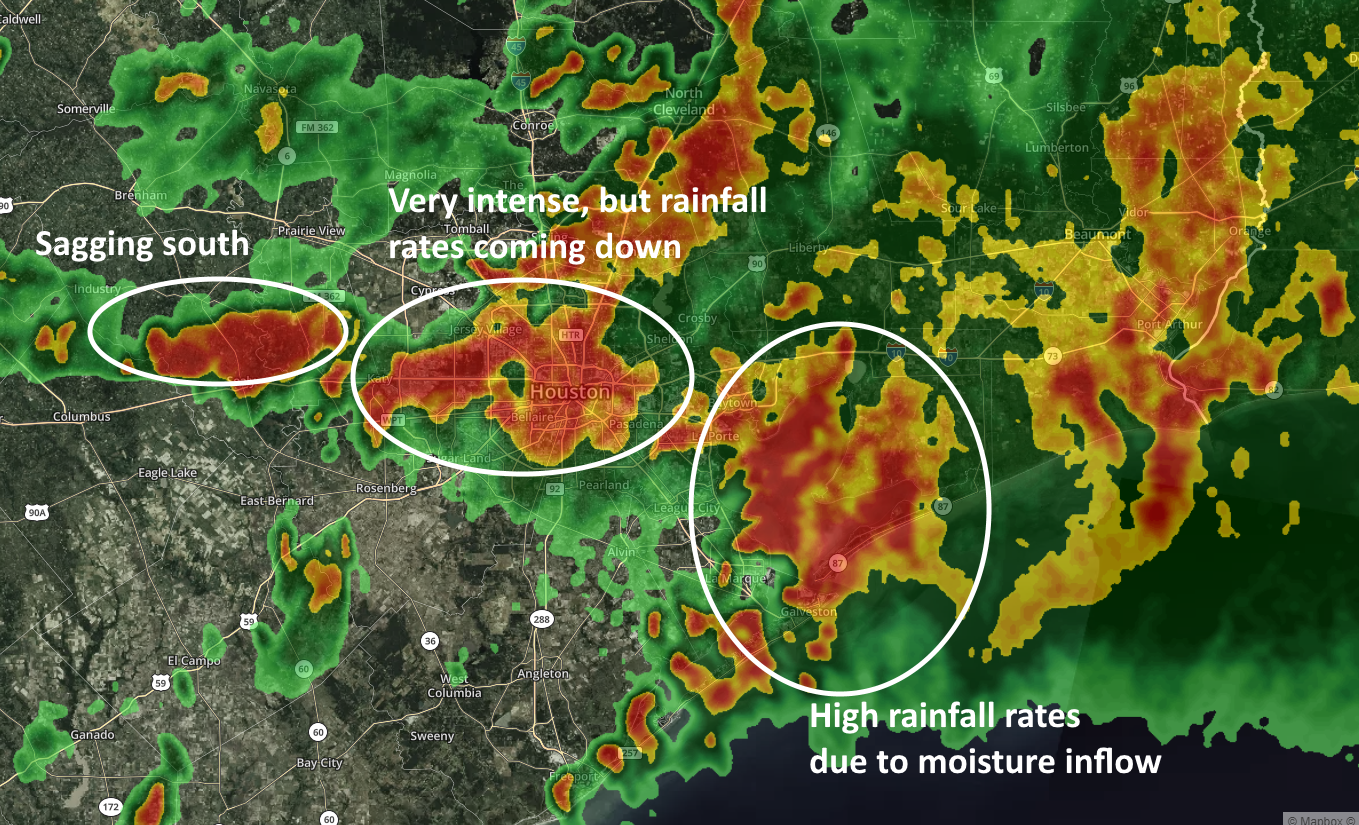
Over the last couple of hours, the radar has shown the heaviest rainfall congealing offshore, and this seems to be in response to falling pressures as the tropical disturbance moves north across the Gulf of Mexico. The net effect of this is that the offshore storms are robbing inland storms of moisture, and thus sapping their ability to produce really high rainfall rates like we saw earlier this morning near Wharton. This is good news for the rest of today, although we’re still going to see some scattered storms, and areas immediately along the coast, such as Galveston, may see intermittent heavy rainfall this afternoon.
Radar image at 11:30am CT shows offshore storms strengthening. (NOAA)
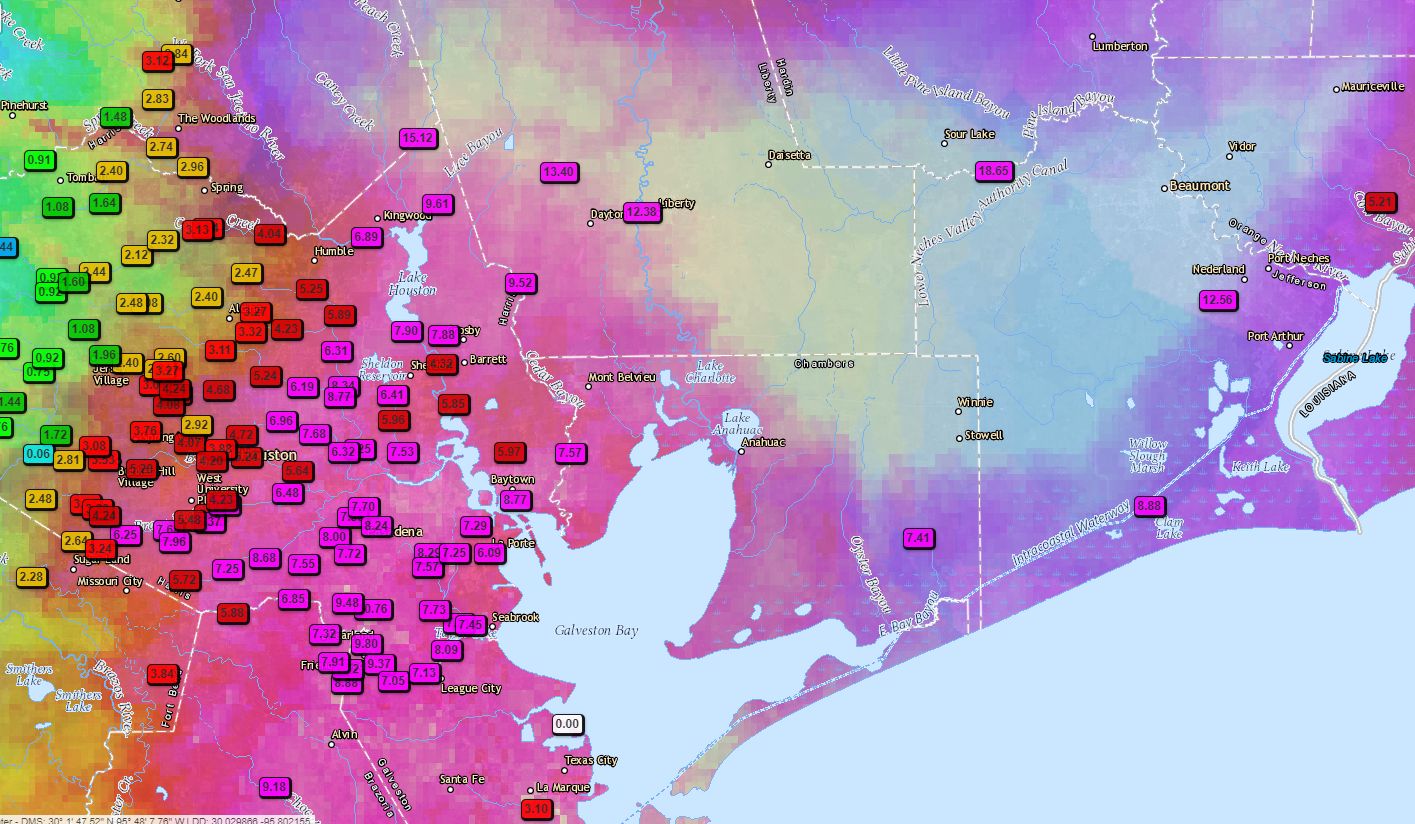
Most of the region has seen manageable rains today, and rainfall rates below 2 inches per hour. But we definitely saw the bullseyes we feared develop in Wharton, Fort Bend, and Matagorda counties this morning. One gauge north of Palacios recorded 14+ inches of rain, and a pretty large region saw 6+ inches since midnight. These totals are shown below.
24-hour rainfall totals for the Houston region. (Texas Mesonet)
The forecast for Wednesday evening through Friday remains tricky. Our best guess is that storms begin to redevelop onshore tonight, but the favored area is probably just east of Houston through the Beaumont area, and into southwestern Louisiana. In Houston, on Thursday, we will probably see less coverage than Wednesday—perhaps quite a bit less. We still have some concerns about later Thursday night and Friday, and we’ll address those in posts to come. My sense, however, is that the worst of this system, in terms of organized activity, is now slowly moving away from the metro area.
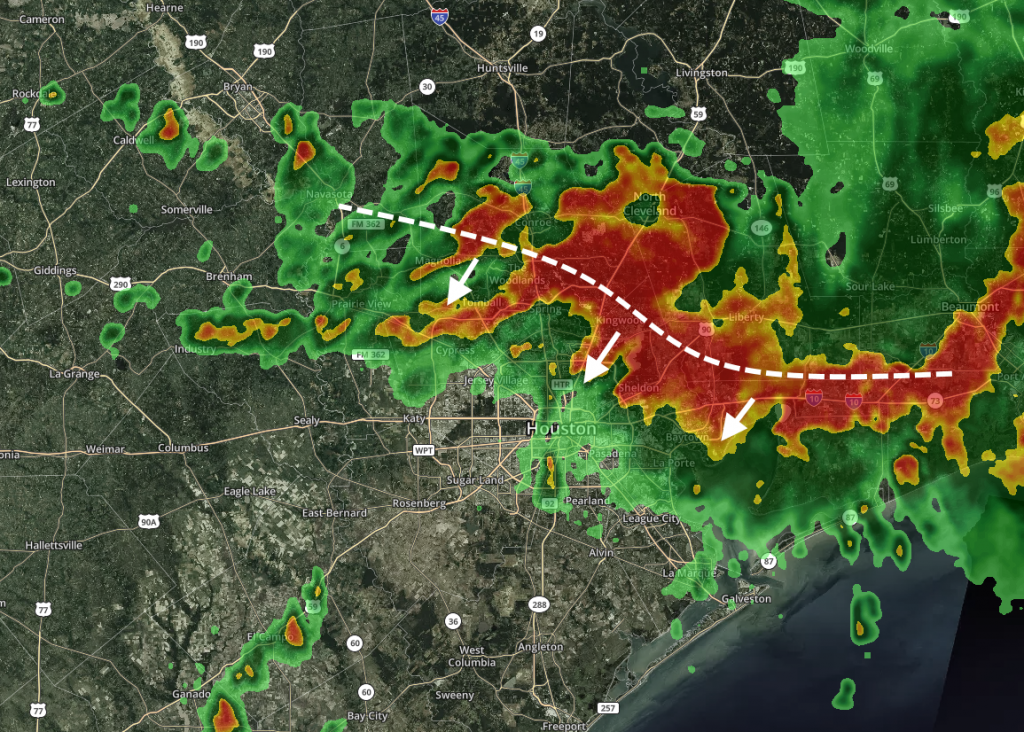
A large mass of storms continues to work through the Houston metro area this morning, but the rains have been manageable for the most part, with accumulations of 1-2 inches. However, we do have some significant concerns about areas to the southwest of Houston.
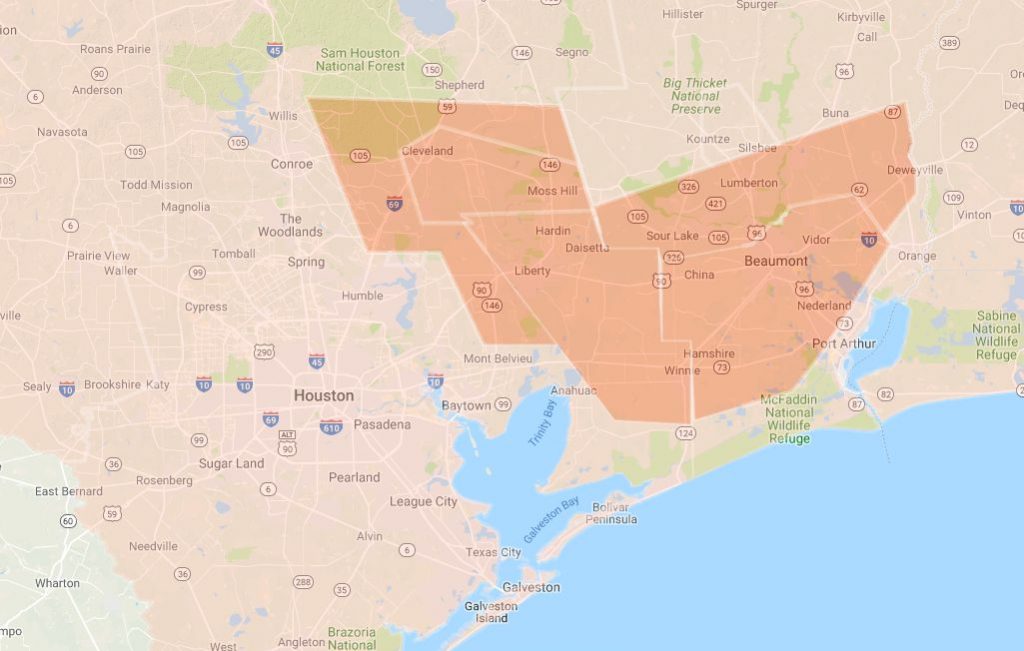
A particularly strong band of showers has established itself in Wharton and Fort Bend counties this morning. One location on the Colorado River, south of Wharton, briefly recorded rainfall rates in excess of 4 inches per hour, and has measured nearly 10 inches of rainfall since shortly before sunrise. A flash flood warning is in effect for this area through 9:45 a.m., and we anticipate these storms will slowly move east, toward Brazoria, southern Harris, and Galveston counties this morning. So if you live in the southern half of the metro area, pay close attention to the radar for the next several hours.
Area of flash flood warning in effect until 9:45am CT. (National Weather Service)
Most of the high-resolution modeling suggests this very moist air mass will shift mostly offshore by this afternoon, perhaps by around 2pm to 4pm. This should then lead to a reprieve in widespread storms at least through this evening.
The forecast for Thursday and Friday is not particularly clear, but we do not expect quite the organized storms that we are seeing across much of the Houston metro area this morning to persist. Nevertheless, heavy rain will remain a threat heading into the weekend. We will try to firm up this forecast in a new post later today.
Storms that fired up on Tuesday afternoon have died down this evening, in part due to the loss of daytime heating. Unfortunately, this is just a lull, as the tropical disturbance that will make for wet conditions through Thursday morning remains in the Gulf, roughly centered near the border between Texas and Mexico. This pre-sunset satellite image captures the size of the tropical system, and amount of moisture it can potentially bring into Texas and Louisiana as it moves north-northeast. Fortunately, it appears the heaviest rains will probably remain offshore, but we’re still definitely in watch-and-wait mode.
Satellite image captured at 6:45pm CT Tuesday. (NOAA)
Our best tools to forecast rain totals over the next 24 to 36 hours, high-resolution models, have not done a tremendously good job so far today, and they’re not initializing well. This means that even 1 or 2 hours into an individual model’s run, it already is pretty far off what is actually happening on radar. So, to some extent, we’re flying blind in terms of forecasting.
Still, with high atmospheric moisture levels (precipitable water values will rise above 2.2 inches over the next day or so, which is a prerequisite for high hourly rainfall rates) and low pressure at the surface we’re all but guaranteed heavy rainfall for at least part the metro area. After the present lull, it appears as though rain showers will build back up sometime after midnight offshore, and begin to migrate inland again. It’s quite possible that Wednesday morning’s commute will be a soggy one, and with the potential for flooded streets please check road conditions before heading out. We’ll have an update before sunrise.
NOAA rainfall total estimates for now through Friday evening. (Pivotal Weather)In terms of storm totals, as mentioned, the forecast models are all over the place, but areas around Galveston Bay, including southeast Harris County, probably are at the most risk for heavy rainfall that will quickly flood streets. We’re still looking at likely rainfall totals of 2 to 4 inches for most areas, with higher localized amounts of 6 inches or greater. The region’s bayous are in pretty good shape and should be able to handle most of that. It still appears as though the heaviest rains will clear out of the area by or before noon on Thursday.