August is over, but sometimes September isn’t much better

August is over. I always find it interesting to debate whether August or September is the worst month, weather-wise, in Houston. I’m definitely on “Team August” because it’s the hottest month with no hope of relief. But many readers loathe September more, because it’s often nearly as hot, there’s a persistent threat of hurricanes, and the wait for the first real cool front seems to take forever. I can see both sides. But I’m still glad August is over.

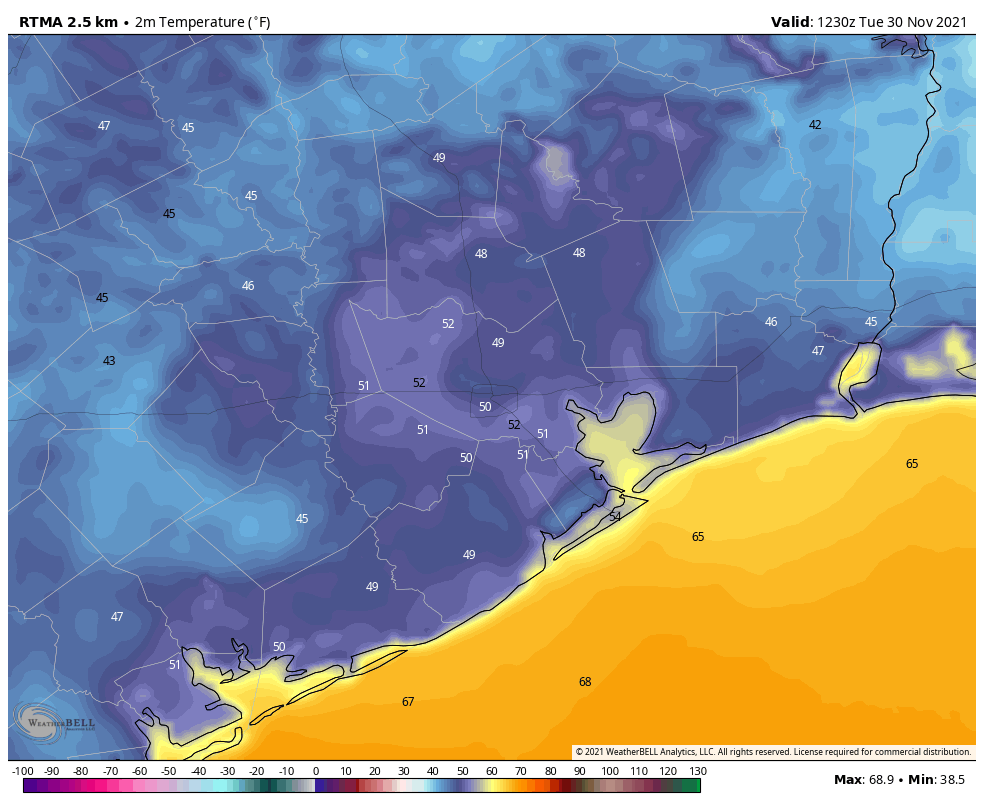
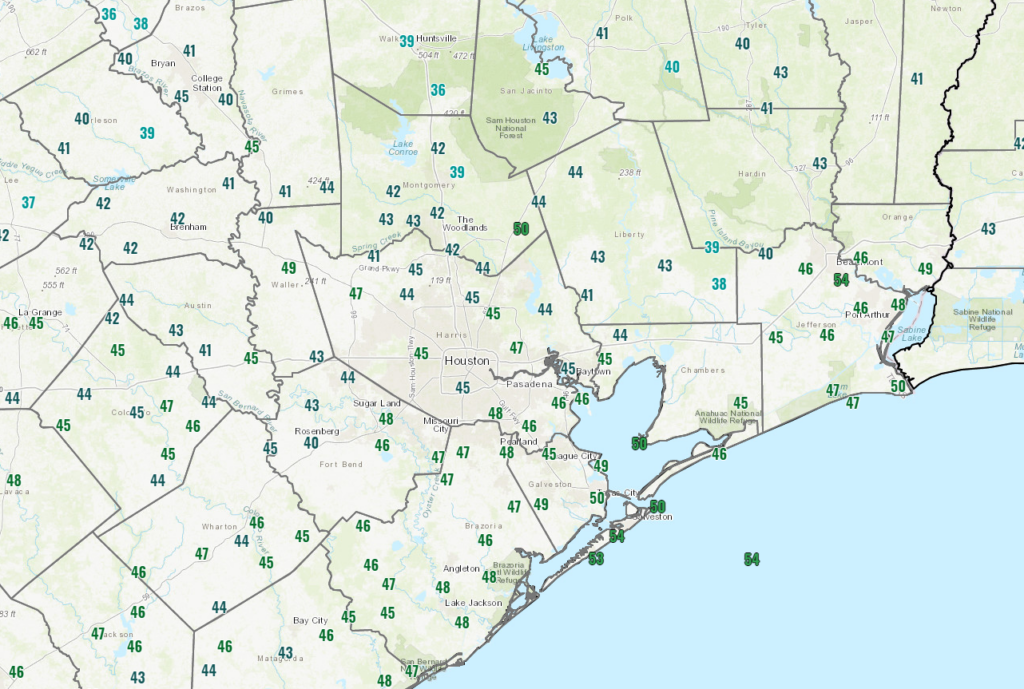
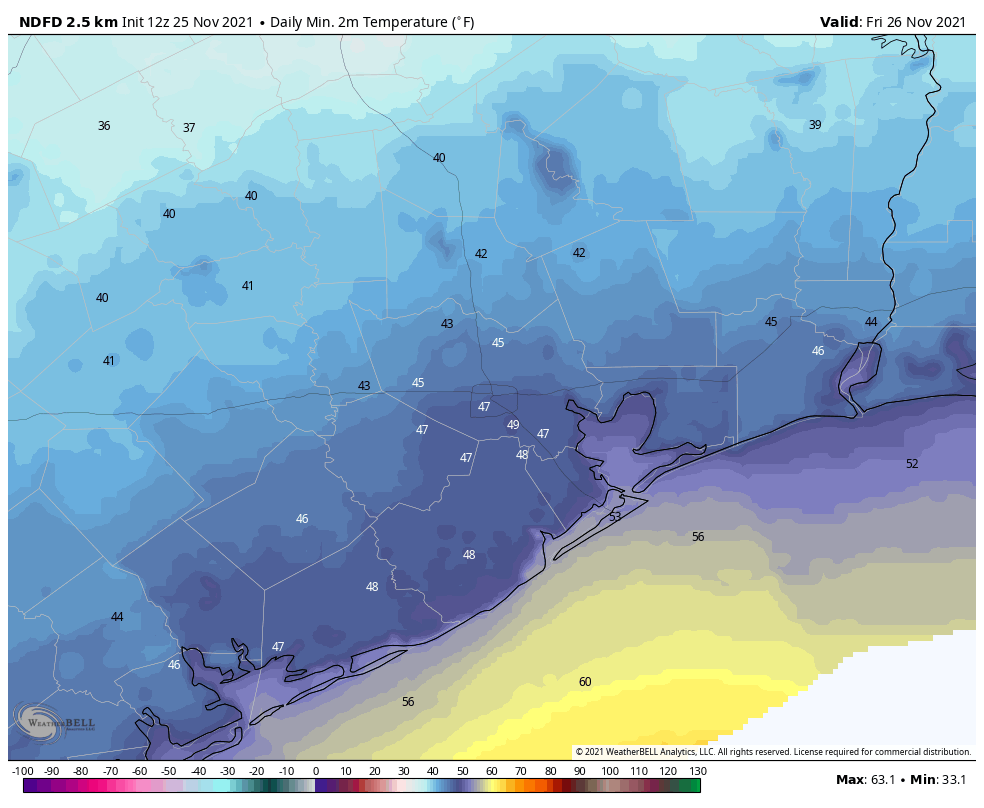
Temperatures just before sunrise in southeast Texas on the first day of September. (Weather Bell)

Wednesday

Although September is here, it definitely will feel like summer. Tuesday’s high temperature reached 99 degrees at Bush Intercontinental Airport, and today will probably be nearly as hot. Skies will be mostly sunny. Later today the combination of moisture and daytime heating should spark some showers. Chances are likely about 40 percent south of Interstate 10, and 20 percent or less inland, further from the source of the moisture. Some showers could be briefly intense. Lows tonight will be sultry.

Thursday

This day should be a lot like Wednesday.

Friday

Another day where we should see a decent chance of showers closer to the coast, with lesser chances inland. Highs will be in the mid-90s.

Saturday, Sunday, and Monday

As high pressure builds over the area, Labor Day Weekend 2021 will be mostly sunny and hot, with minimal rain chances of about 10 percent. Highs will be in the mid-90s. Plan your outdoor activities with confidence.

Next week

Rain chances should perk up by Tuesday or Wednesday of next week, and this could help to drive temperatures down into the low 90s.

Wednesday morning tropical outlook. (National Hurricane Center)

Tropics

The National Hurricane Center continues to suggest an area of low pressure in the Southern Caribbean Sea has a modest chance of developing over the next week, but pretty much all of our best available model guidance keeps that system bottled up in the Caribbean Sea and Southern Gulf of Mexico. We’ll continue to watch it, of course. Way out in the Atlantic Tropical Storm Larry has formed, and it likely will become a major hurricane over the next five days. It should recurve before affecting any landmasses, including hopefully Bermuda.

Summer is almost over, and truth be told it wasn’t a terrible one

Let’s be honest, Houston. This summer has not been that bad. June’s average temperature was 0.6 degrees below normal, July was 1.1 degrees below normal, and August has been 0.6 degrees above normal. Although there have been dry spells, there have been no prolonged droughts. And while we’ve had some heavy rainfall, as summers go, there has been no widespread flooding. And then there’s this: The National Weather Service notes the city has not recorded a 100-degree day since August 29, 2020. So we’ve gone a full 365 days. The last time our region recorded a year without a 100-degree day was 2014.

That is not to say summer is over, but it is winding down. Most notably, days are getting shorter. Today there will be 12 hours, and 46 minutes of daylight, compared to 14 hours and 3 minutes in June. Each new day is now a couple of minutes shorter. The next 10 to 14 days do look fairly warm, to be sure, and there’s a chance we’ll yet hit 100 degrees this year. But after that I think we’re safe. I’d say there’s even about a 25 percent chance we see our first cold front in about 12 to 14 days. Finally there’s the threat of hurricanes. Fortunately we don’t see any immediate threats to the Texas coast.

Highs will be close to the century mark on Tuesday again. (Weather Bell)

Tuesday

Today will be similar to Monday, with mostly sunny skies and highs in the upper 90s. As atmospheric moisture levels increase a little bit later today we could see a few isolated to scattered thunderstorms, but rain chances are probably only about 20 percent. Winds will be light out of the west. Conditions tonight will be warm and muggy.

Wednesday and Thursday

Atmospheric moisture levels should peak mid-week and this will perhaps allow rain chances to rise to 30 or 40 percent. Showers should still be pretty scattered in nature, with partly to mostly sunny skies. Highs will be in the mid- to upper 90s.

Friday, Saturday, and Sunday

As high pressure builds over the region we should see mostly sunny skies this weekend with low to non-existent rain chances. Look for highs in the mid- to upper 90s with slightly cooler nights in the mid- to upper 70s. Plan your outdoor activities this weekend with confidence.

Tuesday morning tropical outlook. (National Hurricane Center)

Tropics

The National Hurricane Center still gives an area of low pressure in the Southern Caribbean Sea a 20 percent chance of developing later this week. However, should anything eventually form—and this may well not happen due to the proximity of Central America—high pressure over the northern Gulf of Mexico should keep it bottled up to the south of Texas. For the end of August, things look pretty good across the tropics for the Gulf.

Sunny, late summer week on tap for Houston

Good morning. Ida has finally weakened into a tropical storm this morning, and is now slowly, at a rate of about 8 mph, moving away from Southern Louisiana. Much of the region is submerged under storm surge and very heavy rainfall. More than 1 million customers in the state, affecting about half of the state’s population, are without power today. Some will be without power for many weeks. Ida, in short, has left a sobering trail of destruction and misery in its wake. We must help our neighbors, and here are some ways to do that right now.

Monday

Today will be hot and sunny, with only a slight chance of showers and thunderstorms. Highs will likely reach the upper 90s. As Ida pulls away from Louisiana, winds will be out of the north and northwest locally, at about 5 to 10 mph, and the overall flow will draw warm air into the region. Rain chances will be down to around 10 percent. Overnight lows will be around 80 degrees.

A hot summer day is on tap for Houston. (Weather Bell)

Tuesday

This will be a similar day to Monday, albeit with slightly higher chances of rain showers, perhaps on the order of 20 percent.

Wednesday and Thursday

Low pressure aloft will bring a modest increase to rain chances by the middle of the week, perhaps about 40 percent for areas south of Interstate 10, and less to the north, and this should also cool temperatures down into the mid-90s. Skies should otherwise be mostly sunny with warm and partly cloudy nights.

Friday, Saturday, and Sunday

While the weekend forecast is not yet locked in, the greatest likelihood is that we see hot and sunny weather, with highs in the mid-90s. As some slightly drier air mixes in, overnight lows may drop into the mid-70s. While not “nice” this definitely would be more pleasant than sultry nights around 80 degrees. Overall rain chances look low this weekend, probably below 20 percent each day.

Tropics

With Ida inland, and an inconsequential tropical depression in the open Atlantic Ocean, what else is there for us to worry ourselves about? The primary area to watch is the southern Caribbean Sea where conditions are somewhat favorable for a tropical depression to develop later this week. The National Hurricane Center gives this area a 20 percent chance of development.

Tropical Outlook on Monday morning. (National Hurricane Center)

This system is likely to approach Central America or the Yucatan Peninsula later this week, and if it survives interactions with landwhich is far from certain—something may eventually move into the Gulf of Mexico. However there is no strong signal in the global models that this will happen, and if it does, there’s little indication it will eventually track toward the upper Texas coast. So while this is something we’re watching, it’s not something we’re particularly concerned about. As for the disturbance moving off of Africa (red X in the map above), it has a high chance of developing but is likely a fish storm that will not bother and landmasses.

Devastating major hurricane near landfall along Louisiana

Hurricane Ida has rapidly intensified overnight, seeing a steep pressure fall and maximum winds increasing to 150 mph. Very nearly a Category 5 hurricane, Ida should reach the southern coast of Louisiana, about 50 miles due south of New Orleans, around Noon today.

This will be the most devastating hurricane to hit the region since Katrina, 16 years ago today. For some areas, in some ways, it will be worse. The eyewall of the storm will pass very near to the New Orleans metro area. Hurricane-force winds extend across a 70-mile diameter.

Satellite image of Hurricane Ida at 8:20am CT on Sunday. (NOAA)

Over the next 24 hours parts of Southeastern Louisiana will experience sustained winds well above 120 mph with higher gusts, 15 to 20 inches of rainfall, and a storm surge of 12 to 15 feet. For the New Orleans area, the winds and rainfall should be significantly greater than experienced during Katrina, although the surge should be less. This storm will offer a stiff test of the levee system built after Katrina struck the below sea-level region in 2005.

Hurricane track forecast for Ida. (National Hurricane Center)

Ida will be barreling into a low-lying, swampy part of the U.S. Gulf Coast. The storm surge will move easily over this region for miles. While parts of the coast of sparsely populated, there is also major infrastructure in harm’s way. Jeff Masters and Bob Henson have an excellent rundown of damages this region experienced during Katrina, including a complete shutdown to the Port of New Orleans and weeks of delayed barge traffic. Impacts will be similarly severe this time around. Food and fuel prices should rise across the country.

Forecast for swath of highest wind gusts from Hurricane Ida. (Weather Bell)

There is no way to sugarcoat this situation. For those who survive, months of misery await the inhabitants of Southeastern Louisiana. Normally recovery efforts are led in Louisiana out of Baton Rouge, the state capital, which is about 100 miles inland. However, Ida is forecast to pass just east of Baton Rouge, with sustained winds of 100 mph. It seems very probable that Ida will knock out power along the entirety of the region’s most populated core, from New Orleans to Baton Rouge. The state—which has one of the worst COVID-19 outbreaks in the country, and nearly 500 patients in ventilators—will lose much of its ability to function. This is just an exceptionally grim situation.

As a forecaster there is not much else to say. The storm is here, and it is a gut punch. Ida is a nightmare scenario for the state of Louisiana. We must stand ready to help them survive, recover, and rebuild.